Home » Rapid Prototyping & Volume
Rapid Prototyping
Rapid Prototyping Services from 1 to over 500 parts
What Is Rapid Prototyping?
Rapid prototyping refers to the creation of physical samples based on a new product design concept. It’s a crucial first step before full-scale production, especially for verifying whether the final product’s appearance, texture, and performance meet expectations.
There are many reasons why product developers choose rapid prototyping. It’s widely used for functionality testing, stakeholder approvals, design iterations, crowdfunding campaigns, trade show models, and as a bridge to low-volume manufacturing.
Prototypes often inspire redesigns, improvements, and other modifications—many of which may not be evident from digital models alone. That’s why prototyping is essential for refining the design before committing to mass production. In fact, catching design flaws early in development can save significantly more than the cost of the prototype itself, making rapid prototyping a smart and valuable investment.
What Are The Different Types Of Rapid Prototyping?
Any physical model can serve as a prototype — the difference lies in how closely it resembles the final product.
At the simplest level, prototypes can be made from paper, plastic, clay, foam, balsa wood, or other common household materials. These low-fidelity prototypes are quick to create and inexpensive, making them ideal for visualizing design ideas and comparing proportions with other components.
While their functionality and durability are limited, they offer valuable insights during the early stages of development.
Higher-fidelity prototypes, on the other hand, are produced using advanced machinery and professional materials. These include various 3D printing methods, vacuum casting, rapid injection molding, and CNC machining.
Prototypes often lead to design changes and improvements that are hard to spot in CAD models alone. By identifying issues before mass production begins, rapid prototyping helps optimize the design and reduce costly mistakes. In many cases, the savings from early error correction far outweigh the prototype’s cost—making it a wise and forward-thinking investment.
How To Choose The Right Rapid Prototyping Technique
The best prototyping method is the one that aligns with your budget, part complexity, functional requirements, and development timeline.
While higher-fidelity prototypes typically require more time and investment, they also offer a more accurate representation of the final product’s form, fit, and function—making them invaluable for validation and refinement.
To choose the right approach, ask yourself the following key questions:
Will the prototype serve as a static display model, or must it be functional?
Does it need to perform under real-world conditions?
Are there multiple components that must interact seamlessly?
What surface finish and texture are required?
What materials should be used?
How critical are strength and durability?
How closely should the prototype resemble the final product?
There are many factors at play, and while we can’t address every scenario here, understanding your goals will guide you toward the most effective prototyping strategy.
Why Choose us
We recommend you contact our experts who can advise you on the method that is best for your application.
How it works
Advantages of Rapid Prototyping
How can partnering with Star Rapid to quickly manufacture a prototype help you and your business? Here are a few ways:
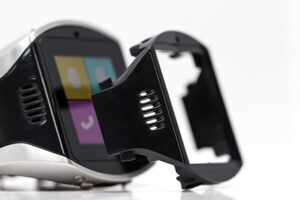
Physical Model
Show your customers and investors a physical model of your product
Show Features
Demonstrate the appearance, dimensions, and features of your product
Test The Market
Test the market with your product before production
Streamline Production
Improve and streamline the production process
Multiple Versions
Create multiple versions with different colors, surface textures, and finishing processes
Common questions
Rapid Prototyping Services FAQs
There are three common rapid prototyping services Star Rapid provides.
CNC machining is a top choice for producing high-fidelity, end-use prototypes from a wide range of raw materials. It offers exceptional speed, precision, and flexibility—making it ideal for both iterative design and functional testing. With CNC, it’s easy to fine-tune your design by making quick adjustments to the cutting program, streamlining the path to a perfected product.
Unlike many other prototyping methods, CNC machining can produce tapped and threaded holes, enabling fully functional, structurally strong prototypes suitable for rigorous engineering evaluation.
Additionally, CNC machining allows you to create small batches of housings and enclosures without the need for costly plastic injection mold tooling. However, it’s important to keep in mind that machined parts may feature different internal corner radii compared to molded parts, along with other minor geometric variations. For optimal results, we recommend consulting with our team during the early design phase.
Polyurethane vacuum casting is a powerful solution for producing up to 30 high-fidelity replicas from a single master pattern.
It allows parts to be cast in a wide range of resins—including engineering-grade plastics—and even enables overmolding with multiple materials. Vacuum casting is a popular alternative to plastic injection molding, especially for low-volume production of housings, enclosures, and complex hollow components.
At our facility, we specialize in delivering production-quality cast parts with exceptional precision and consistency.
Beyond our expert craftsmanship, we offer a complete range of post-processing and finishing services to elevate your prototypes to showroom-ready quality.
Discover how our vacuum casting service can help you turn your concept into a polished, production-grade product.
Our rapid tooling service delivers high-quality plastic injection mold tools in as little as two weeks.
If your project requires prototype cases, enclosures, or low-volume production parts, rapid tooling offers a fast and cost-effective solution.
Connect with our engineering team for a free Design for Manufacturing (DFM) review—and take the first step toward bringing your product to market faster.
Rapid prototyping isn’t limited to a single technology or method.
In fact, many of the same manufacturing techniques used for prototyping are also suitable for full-scale production.
The true value of rapid prototyping lies in its ability to produce physical models that accurately reflect the design intent—quickly, cost-effectively, and with minimal investment in tooling or raw materials. These prototypes are not only durable, but also instrumental in accelerating development and reducing risk before moving to mass production.
Why Choose us
Why Choose Star Rapid For Your Next Rapid Prototyping Project
Making a quality prototype is an important first step in your product development journey. We’re veterans in rapid prototyping and we can help you to make your design dreams come to life.
Industry-Leading Expertise
From independent inventors to global corporations, we’ve helped hundreds of clients bring their ideas to life with exceptional prototypes that surpass expectations — and we’re ready to do the same for you.
Cutting-Edge Equipment
We’ve invested in premium materials and state-of-the-art equipment to deliver superior rapid prototypes that look, feel, and function like full-production parts—at a fraction of the time and cost.
Intelligent Quotations for Every Project
Our proprietary AI-powered quoting system delivers fast, accurate estimates—empowering you to stay on budget and on track with your product development goals.
Bring Your Protopying To Market With Fioria
Most quotes are delivered within 24 hours or less, depending on your project details.
A dedicated customer support partner will follow up with you directly to ensure you’ve received your quote, fully understand every detail, and get answers to any questions you may have.
See our case studies
Rapid Prototyping Projects
Fioria provides best-in-class rapid prototyping services. Learn how we can support you on your next project.
Stem Cell Isolator Chamber
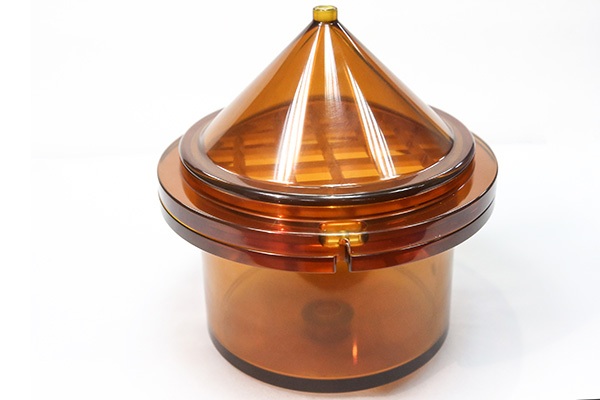
While Ultem can be plastic injection molded, we chose CNC milling and turning for this project. Why? The client required only a small quantity of parts—delivered fast and with precision. Our approach ensured tight tolerances and quick turnaround without compromising quality.
Click the button below to read the full case study and see how we made it happen.
Myant Skiin Smart Clothing Sensor
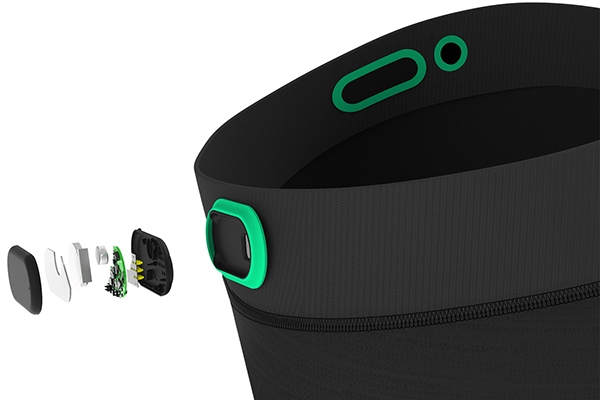
When Myant approached us to create rapid prototypes for their high-profile product launch at CES 2018, they needed parts that matched final production quality in both fit and finish.
With a tight deadline, we recommended a fast, cost-effective solution: producing master patterns using SLA 3D printing, followed by polyurethane vacuum casting to create multiple identical copies.
This approach allowed us to deliver showroom-quality prototypes quickly—without the need for hard production tooling—making it one of the most efficient ways to produce plastic prototypes at scale.
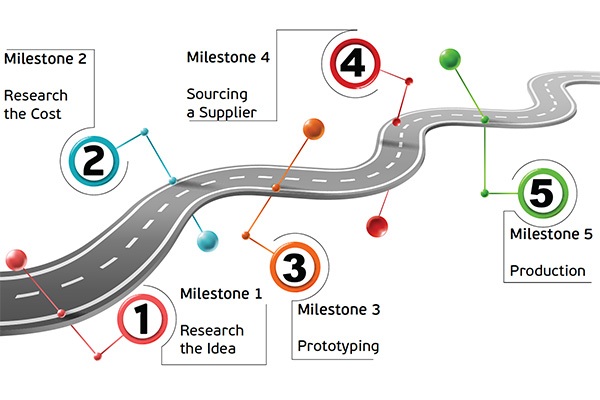
How it works
From Prototyping To Production
When it’s time to move from rapid prototyping to volume production, Fioria provides scalable, flexible solutions to meet your needs.
With no minimum order requirements, our lean manufacturing services are perfect for launching new products on your timeline—without unnecessary delays or commitments.
Discover the advantages of low-volume manufacturing and how we can seamlessly support your journey from prototype to production.
Fioria
Start Your Rapid Prototyping Project Today
Our enhanced algorithm cuts rapid prototyping quote times by up to 90%, with most quotes delivered in 24 hours or less—depending on your project requirements.
You’ll also receive direct support from a dedicated customer service partner to ensure you fully understand your quote and get answers to any questions you may have.